
Confused about Plan B and the abortion pill? You deserve clear answers and support without judgment.
If you’ve ever wondered whether Plan B and the abortion pill are the same thing, you’re not alone. The confusion is understandable: both involve pills, both relate to pregnancy, and the names are often mixed up in casual conversation. However, they are not the same, and understanding the difference is important.
Here’s the short version: Plan B is emergency contraception taken before a pregnancy starts. The abortion pill is used after pregnancy has already begun. One tries to prevent pregnancy. The other terminates pregnancy. If you’re looking for abortion pill information in Austin, TX, that distinction is the single most important thing to understand before you do anything else.
What Is the Difference Between Plan B and the Abortion Pill?
It comes down to timing.
Levonorgestrel is an emergency contraceptive medicine sold under the brand name Plan B. It is used to help prevent pregnancy after unprotected sex or the failure of another birth control method. According to the Mayo Clinic, levonorgestrel works by preventing a woman’s egg from fully developing and may also prevent the egg from attaching to the wall of the uterus. Plan B should be taken as soon as possible and no later than 72 hours after unprotected sex or birth control failure.
The abortion pill is a completely different situation. It’s a medication regimen (typically mifepristone followed by misoprostol) used to end a pregnancy that’s already underway. We’re talking about a pregnancy that’s been confirmed, where implantation has occurred.
So when people search Plan B vs. abortion pill, is Plan B the abortion pill, or morning-after pill vs. abortion pill, the answer is straightforward: they serve entirely different purposes at entirely different stages.
Understanding the difference can help you make sense of your questions and next steps.
The comparison below offers a clear look at how Plan B and the abortion pill differ in purpose, timing, and use.
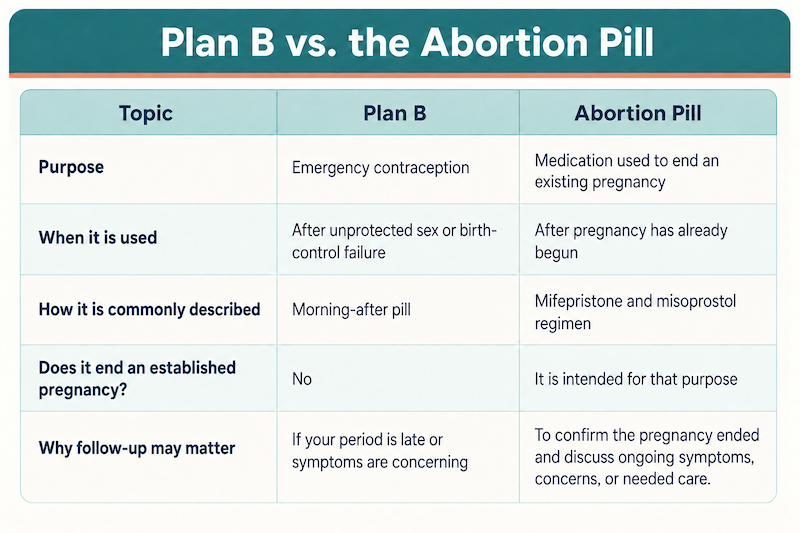
Is Plan B the Same as the Abortion Pill?
No. Plan B is emergency contraception, while the abortion pill is used to end an established pregnancy. An established pregnancy means that a fertilized egg has implanted in the uterine wall. Plan B works primarily by delaying ovulation and may also prevent a woman’s egg from attaching to the uterine wall. It does not end a pregnancy after implantation.
Our advocates hear this confusion firsthand. A woman may call and say, “I don’t understand why I’m still pregnant. I took Plan B.” She thought Plan B would work like the abortion pill, but the medications have different purposes. If you took Plan B and later received a positive pregnancy test, the pregnancy may already have been established, or Plan B may not have prevented pregnancy.
If that’s where you are right now, the next step is getting accurate information about where things stand.
What Does Plan B Do, and When Should It Be Used?
Plan B One-Step contains levonorgestrel, a synthetic hormone. Its primary job is to delay or prevent ovulation. Think of it as hitting pause on your cycle — if your body hasn’t released an egg yet, the sperm has nothing to meet.
A few things people don’t always know about Plan B:
It’s time-sensitive. You have about 72 hours after unprotected sex. The sooner you take it, the better chance it has of working. Miss that window, and taking it is essentially pointless.
It works primarily before ovulation. Plan B’s main purpose is to delay or prevent the release of an egg. It does not end a pregnancy after implantation has occurred.
It’s not birth control. Plan B is meant for emergencies, not regular use. Some women take it monthly as if it were a contraceptive — that’s not what it’s designed for, and using it that way can throw your cycle off significantly.
Your period may get weird after. Delayed periods, longer bleeding, spotting — Plan B can make your cycle unpredictable for a while afterward. If your next period doesn’t come when expected, take a pregnancy test.
Does Plan B End An Established Pregnancy?
No. Current medical guidance is clear on this: Plan B does not terminate a pregnancy once the fertilized egg has implanted in the uterus. If implantation has already occurred and you take Plan B, you’re still pregnant.
What Does The Abortion Pill Do, And When Is It Used?
The term “abortion pill” typically refers to a two-drug regimen: mifepristone and misoprostol, used together to end an intrauterine pregnancy. According to FDA information, mifepristone blocks progesterone (a hormone the pregnancy needs to continue), and misoprostol causes cramping and bleeding to complete the process. This regimen is only FDA-approved through ten weeks of gestation.
For anyone searching for abortion pill information in Austin, TX, this is the critical point: the abortion pill is used when pregnancy already exists and has been confirmed. It’s not prevention — it’s termination.
For more general background, Freedom Women’s Care’s Abortion Information page covers what their team offers in terms of education and support.
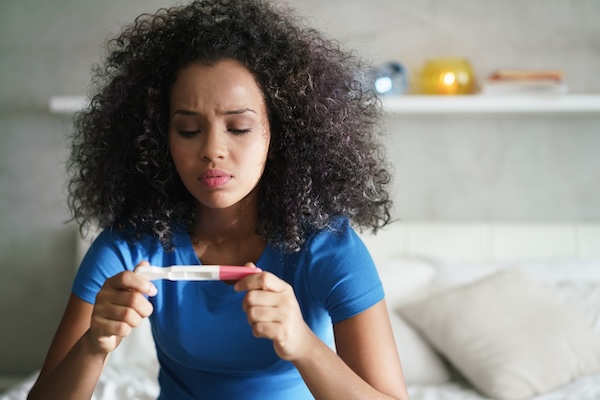
When you’re unsure what comes next, getting clear information about your pregnancy can help. You deserve answers to your questions, support without pressure, and care that puts your health first.
Why Does Pregnancy Confirmation Matter Before Your Next Step?
If you’re considering the abortion pill, here’s something that doesn’t get talked about enough: a missed period or a positive home test doesn’t tell you everything you need to know.
You could be earlier or further along than you think. The pregnancy could be in a dangerous location (ectopic). You might not actually be pregnant at all — sometimes tests are inconclusive, or symptoms have another explanation.
Before making any decision, it helps to know:
- Whether you’re actually pregnant
- How far along the pregnancy is
- Whether the pregnancy is located in the uterus (this is critical for safety)
- Whether you need any immediate follow-up care
Freedom Women’s Care offers free Pregnancy Tests and may recommend Ultrasound services depending on your situation at no cost to you.

Why Does An Ultrasound Matter?
An ultrasound can provide information about how far along a pregnancy is and help identify early pregnancy complications. Cleveland Clinic’s pregnancy ultrasound guidance lists confirming pregnancy and determining gestational age among the reasons a healthcare provider may recommend an ultrasound.
This is especially important because abortion medication does not treat an ectopic pregnancy. An ectopic pregnancy — where the embryo implants outside the uterus, usually in a fallopian tube — is a life-threatening emergency. Taking abortion pills in that situation won’t resolve it, and delaying real medical care puts your life at risk.
If you’re feeling overwhelmed or pressured to decide quickly, you don’t have to figure everything out in one day. There’s time to get the facts. You can learn more about Unexpected Pregnancy support or connect with a Client Advocate who will listen without judgment.
What Side Effects And Warning Signs Should You Know?
These are two different medications with very different effects on your body. Knowing what’s normal and what’s not could genuinely save your life — that’s not an exaggeration.
What Are Common Plan B Side Effects?
The most common side effect is nausea. Because Plan B delivers a high dose of hormone all at once, many women feel sick after taking it. Some providers even prescribe anti-nausea medication alongside it. You might also experience:
- Vomiting
- Irregular bleeding or spotting
- A delayed or longer-than-normal period
- Cycle disruption that makes it hard to track ovulation afterward
These side effects are typically short-term. But if your expected period never arrives, take a pregnancy test. If it’s positive, seek medical attention.
What Are Common Abortion Pill Side Effects?
Cramping and bleeding are expected effects of the medication. Cleveland Clinic notes that these effects often begin after taking misoprostol and may include heavy cramping, heavier bleeding, and blood clots. Other common side effects include:
- Nausea
- Diarrhea
- A low-grade fever or chills
- Tiredness
- Dizziness
This is why clear abortion pill side effects information matters. You need to be able to tell the difference between what’s expected and what’s an emergency.
When Should You Seek Urgent Medical Care?
If you are bleeding heavily enough that you’re worried about hemorrhaging, go to the ER immediately.
Severe abdominal pain, soaking through multiple pads per hour, feeling faint, or running a high fever — these are not normal side effects. They are warning signs.
If abortion pills were obtained online, it is important to know where they came from and to have clear instructions for using them. Under the FDA’s Mifepristone REMS Program, mifepristone must be prescribed by a certified healthcare provider and dispensed by or under the supervision of a certified prescriber or certified pharmacy. Patients must also receive the FDA-approved Medication Guide. If you received pills without instructions or are unsure of their source, contact a qualified healthcare provider or pharmacist before taking them.
If you’ve already taken the first abortion pill and you’re not sure what to expect — or you’re having second thoughts — reach out for help right away. Freedom Women’s Care has information and support available, and you can also read: What if I’ve already taken the first abortion pill and I’m having second thoughts?
If you are hemorrhaging, call 911. Do not wait.
What If You’re Considering the Abortion Pill and Still Have Questions?
You don’t have to have it all figured out before you reach out. Many of the women who contact Freedom Women’s Care are in the middle of sorting through everything at once — timing, symptoms, decisions, fear, pressure from people around them.
Here are questions we hear all the time:
- Am I definitely pregnant?
- How far along am I?
- Do I need an ultrasound first?
- What side effects should I expect?
- What symptoms mean I need to get to a hospital?
- Can I talk to someone without being judged or pressured?
Our advocates keep these conversations factual and calm. They ask questions to understand what’s really going on — because sometimes the urgency isn’t actually about the pregnancy itself. It’s financial stress, a relationship, fear of telling someone. Those things deserve to be heard, too.
You have more time than you think. And you don’t have to decide anything today.

Where Can You Get Abortion Pill Information in Austin, TX?
If you’re looking for abortion pill information in Austin, TX, in a place that won’t pressure you, Freedom Women’s Care provides free, confidential support for women who want answers before making any decisions.
What that can look like:
- Free Pregnancy Tests
- Free Ultrasound when appropriate
- Pregnancy confirmation and gestational age information
- Honest education about pregnancy options
- Abortion pill information — what it is, what it does, what it doesn’t do
- Support by phone or text (texting is confidential, too — many women prefer it)
- Additional Free Services
Everything stays between you and the person you’re talking to. No one is going to tell anyone else. Whether you’re 16 or 36, it’s a safe space to ask the questions you’ve been afraid to ask out loud.
When you’re ready, you can book an appointment.
Frequently Asked Questions
Is Plan B the abortion pill?
No. Plan B is emergency contraception that works primarily by delaying ovulation. The abortion pill is used to end a pregnancy that has already implanted in the uterus. They are completely different medications with different purposes.
Does Plan B end a pregnancy?
No. If your pregnancy has already implanted in the uterus, Plan B will not end the pregnancy. It primarily works before pregnancy is established by trying to prevent ovulation from happening.
What is the difference between the morning-after pill and the abortion pill?
The morning-after pill (Plan B) is taken after unprotected sex to try to prevent pregnancy from starting. The abortion pill is taken after pregnancy is confirmed to terminate it. “Morning-after pill” and “Plan B” refer to the same thing — emergency contraception. Neither one is an abortion pill.
Why might I need an ultrasound before making a decision?
An ultrasound can confirm that you’re actually pregnant, estimate how many weeks along you are, and check whether the pregnancy is in the uterus. That last part matters because an ectopic pregnancy is a medical emergency that abortion pills cannot treat.
Can the abortion pill treat an ectopic pregnancy?
No. An ectopic pregnancy requires prompt medical evaluation and treatment. Abortion pills will not resolve it and could mask symptoms of a dangerous situation.
Can I get information without being pressured about what to do?
Yes. Freedom Women’s Care offers a confidential, pressure-free place to ask your questions, confirm a pregnancy, and learn about what support is available. You can call, text, or come in — whatever feels most comfortable. More answers are available in the Pregnancy FAQ.
This article was medically reviewed by Blake Weidaw, MD, an OB-GYN at Vitae Clinic, to help ensure the medical information is accurate and clearly presented.

Sources
- Plan B One-Step (1.5 mg levonorgestrel) Information | FDA
- What Is the Difference Between Abortion Pills and Morning-After Pills? | ACOG — https://www.acog.org/womens-health/experts-and-stories/ask-acog/what-is-the-difference-between-abortion-pills-and-morning-after-pills
- Emergency Contraception | ACOG — https://www.acog.org/womens-health/faqs/emergency-contraception
- Questions and Answers on Mifepristone for Medical Termination of Pregnancy Through Ten Weeks Gestation | FDA
- Mifepristone (Mifeprex) | MedlinePlus Drug Information
- Ectopic Pregnancy | MedlinePlus
- Pregnancy: Gestation, Trimesters & What To Expect | Cleveland Clinic
- Medical Abortion: What It Is, Pain, Risks & Recovery | Cleveland Clinic
- Ultrasound in Pregnancy: What To Expect, Schedule & Results | Cleveland Clinic
- Levonorgestrel (oral route): Side Effects & Dosage | Mayo Clinic
Disclaimer
This article is for educational and informational purposes only and is not a substitute for medical advice, diagnosis, or treatment. It is not intended to provide legal advice. Every pregnancy and health situation is unique. If you have questions about your health, possible pregnancy, symptoms, or treatment options, consult a qualified healthcare provider. If you are experiencing severe symptoms or think you may have a medical emergency, call 911 or seek emergency medical care right away. Freedom Women’s Care provides pregnancy support services and educational information but does not replace medical care.
Have Questions? We’re Here for You.
Our team can answer your pregnancy questions, help you find a provider, and support you — completely free.